
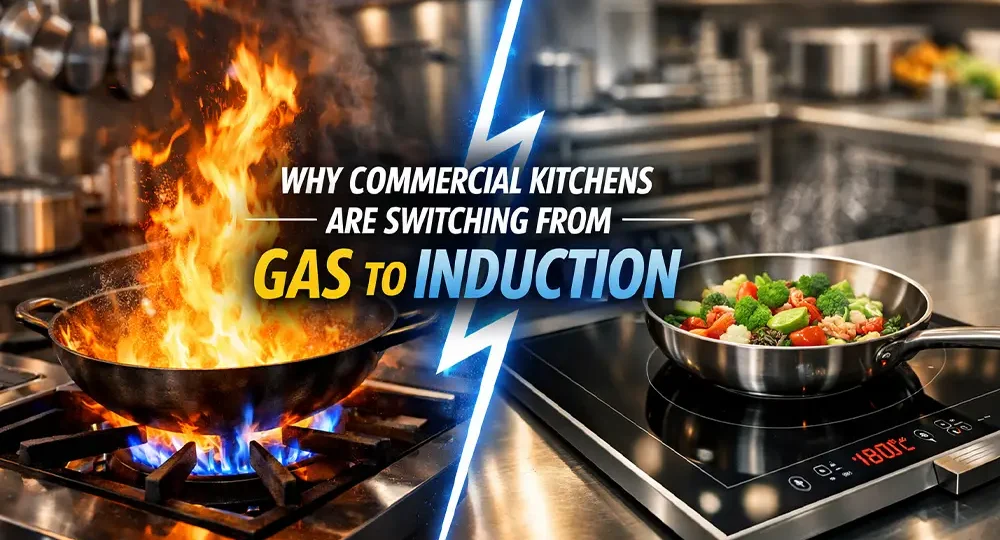
The way commercial kitchens operate today is very different from how they used to function a few years ago. Rising fuel prices, increasing operational pressure, and a stronger focus on safety and sustainability are forcing businesses to rethink their cooking methods. Because of this, many kitchens are gradually moving away from traditional gas systems and adopting induction-based solutions.
Whether it’s a restaurant, hotel, cloud kitchen, or catering unit, the shift is clearly visible. Induction cooking is no longer considered an alternative—it is becoming a preferred and practical choice for businesses that want better efficiency and long-term reliability.
Growing Demand for Induction in Commercial Kitchens
Over the last few years, the demand for induction cooking equipment has grown steadily, especially in markets like India. As cities expand and food businesses become more organised, kitchen owners are looking for solutions that are easy to manage and cost-effective.
Today, rising LPG costs and supply uncertainty are major reasons behind this shift. Businesses need a reliable and predictable cooking solution, making induction a practical choice.
With the growth of cloud kitchens and high-volume operations, induction systems offer better efficiency, low maintenance, and consistent performance—making them essential for modern kitchens.
Gas vs Induction: What Really Makes the Difference?
When businesses compare commercial kitchen induction vs gas, the differences become obvious in day-to-day operations.
Gas cooking has been the standard for years, but it comes with challenges like heat loss, safety risks, and fluctuating fuel costs. On the other hand, induction systems work by directly heating the cookware, which makes them more efficient and easier to control.
They also reduce cooking time, require less maintenance, and create a cleaner working environment. This is why many businesses are now choosing modern solutions like a commercial induction cooktop to upgrade their kitchens.
LPG Supply Issues and Rising Costs
One of the biggest concerns for commercial kitchens today is the uncertainty around LPG supply. Delays or shortages in gas availability can disrupt kitchen operations and affect customer service.
At the same time, fluctuating LPG prices make it difficult for businesses to plan their expenses. Electricity-based cooking systems, on the other hand, are more cost-predictable and easier to maintain.
To avoid these challenges, many businesses are either switching completely to induction or using it alongside gas in a hybrid setup.
Energy Efficiency That Actually Saves Money
In a commercial kitchen, equipment runs for long hours, so energy efficiency plays a big role in overall costs.
Induction cooking works differently from gas. Instead of heating the air around the cookware, it transfers heat directly to the vessel. The result reduces energy wastage and speeds up the cooking process.
Over time, this procedure leads to noticeable savings. Kitchens also stay cooler, which reduces the load on ventilation and cooling systems—another indirect cost benefit.
A Safer Kitchen Environment
Safety is always a priority in commercial kitchens. Gas systems involve open flames and the risk of leaks, which can be dangerous if not managed properly.
Induction cooking removes these risks completely. There is no open flame, and most systems come with built-in safety features like automatic shut-off.
For staff, this creates a much safer and stress-free working environment. For business owners, it means fewer risks and better compliance with safety standards.
Moving Towards Sustainable Kitchen Practices
Sustainability is no longer just a buzzword—it has become an important part of how businesses operate.
Induction cooking supports this shift by reducing emissions and eliminating combustion gases. It also improves indoor air quality, which is better for both staff and the overall kitchen environment.
Many modern food businesses are now choosing induction not just for efficiency, but also to align with eco-friendly practices.
Better Control, Faster Cooking
In a busy kitchen, speed and consistency can make a big difference. Induction technology allows chefs to control temperature more precisely, which helps in maintaining food quality.
It heats up quickly and responds instantly to changes, making it easier to manage cooking during peak hours. This is especially helpful for QSRs, cloud kitchens, and high-volume setups where time is critical.
Comfortable Working Conditions for Staff
Anyone who has worked in a gas kitchen knows how hot and uncomfortable it can become, especially during rush hours.
Induction kitchens, on the other hand, generate much less heat. This makes the workspace more comfortable and easier to manage.
When staff are comfortable, they work more efficiently, make fewer mistakes, and are less likely to feel exhausted. Over time, this also helps in retaining skilled workers.
Smarter Use of Kitchen Space
Modern kitchens are all about smart design and efficient use of space.
Induction systems eliminate the need for bulky gas pipelines and cylinder storage, allowing more flexibility in layout. This is especially useful for smaller kitchens or businesses operating in urban areas where space is limited.
They are also easier to clean and maintain, which helps in maintaining hygiene standards.
Things to Consider Before Switching
While induction offers many advantages, the transition does require some planning.
The initial investment can be higher compared to gas systems. In some cases, electrical infrastructure may need upgrades to support the equipment. Businesses also need to ensure they use compatible cookware.
However, these are mostly one-time adjustments. Proper planning allows for easy management, and the long-term benefits typically surpass the initial costs.
What the Future Looks Like
The shift toward induction is part of a bigger move toward electric and smart kitchens.
Currently, many businesses are using a mix of gas and induction to balance flexibility. Over time, we anticipate a rise in the prevalence of fully electric kitchens.
As technology improves and infrastructure becomes stronger, induction cooking will likely become the standard across the industry.
Conclusion
The shift from gas to induction in commercial kitchens is happening for a beneficial reason. It’s not just about following a trend—it’s about making operations safer, more efficient, and future-ready.
From cost control and safety to sustainability and performance, induction cooking offers clear advantages. When comparing commercial kitchen induction vs gas, it becomes evident why more businesses are making the switch.
Solutions like a commercial induction cooktop are helping modern kitchens operate smarter and more efficiently.